Pues también podría haberse dedicado España a Norteamérica en lugar de a Sudamérica. Sólo pensar en aquellas enormes vaguadas por donde pasaban los ganados en las películas, con sus choperas y bosquecillos de ribera. En lugar de esos lugares subtropicales. No sé qué se les perdió por allí, la verdad. Deberían haberse enfocado en buscar el oro en el norte, praderas y bosques, y dejarse de selvas y ríos.Entonces pensara que, al igual que argentina, EEUU es Europa, no?

Install the app
How to install the app on iOS
Follow along with the video below to see how to install our site as a web app on your home screen.
Nota: This feature may not be available in some browsers.
Estás usando un navegador desactualizado. Es posible que no muestre este u otros sitios web correctamente.
Debe actualizar o usar un navegador alternativo.
Debe actualizar o usar un navegador alternativo.
Internacional Canales interesantes para seguir la política internacional y temas de geopolítica.
- Autor del tema Gothaus
- Fecha de inicio

Gothaus
Será en Octubre
Lo que pasa es que el hombre se moja mucho. A mí hay cosas que dice que me parecen pasadas de tuerca y muy rebuscadas, pero es muy interesante en general y se nota que tiene muchos conocimientos.El de predictive History me gusta mucho, patina un poco a veces y presenta a china mejor de lo que es, pero por lo general da en el clavo
Lo que trata es de hacer predicciones basándose en la historia, en la política y en la teoría de juegos. Es un analista muy interesante.
ahora tenemos los vestigios de ceuta y melilla que no sabemos qué hacer con ellosEs verdad. Más les valdría haber continuado la Reconquista sobre el norte de África. Mejor nos iría ahora.
yo siempre he dicho de usar melilla como punto de tránsito
y trasladar a todos los musulmanes a melilla para después decir ahí os quedáis
y empezar a defender marítimamente españa.
en el sur.
con toda la fuerza disponible.
con ceuta se puede hacer una base militar.
Gothaus
Será en Octubre
No, ya no. En el mío te llevabas las vacas al monte por la mañana temprano y luego, sobre las 6, las ibas a recoger, pero muchas veces ya venían a medio camino.También recuerdo los jueves en Segovia. De mercado ganadero, y sin ganado delante, que se lo dejaban pastando o en las cuadras o en los cebaderos. De todos los pueblos, en el Azoguejo y aledaños, los hombres vendiendo y comprando reses. Como dices, la palabra era todo.
Hace siglos que no voy así que no sé si sigue o si ya no merece la pena. Pero si ya no vuelven las lecheras a la tarde, porque no han ansioso. Toda la vida, no las de carne, que ésas andan por ahí pastando, las de leche, salían del pueblo en rebaño hacia el soto, y volvían solitas al atardecer, con ganas de que les ordeñasen. Con su reguero por el camino. Pues no. Ya no. No lo entiendo. Así que ya no hay bizcochos de nata
Yo creo que las subvenciones han perjudicado al campo. Antes se ordeñaba para casa, se hacía mantequilla, cuajada... Ahora, mi familia se va al supermercado a comprar la leche, teniendo vacas en casa que podrían ordeñar. Ya es la comodidad. Sólo trabajan en verano, cuando la hierba o cuando van a la leña, y las veces que compran o venden reses y para de contar.
Otra cosa de la que me acuerdo del pueblo, todas las puertas abiertas, todo por ahí. Hoy las tienes que cerrar, que hay mucho forastero pasando y nunca se sabe. La desconfianza. La quiebra de la comunidad. Pero esto no es algo nuevo. Empezó con la citada adoración al dinero, con el cambio de mentalidad de la gente. Me acuerdo de oír, hace muchos años, a mi abuela lamentarse de que los vaqueiros habían cambiado, que ya nadie ayudaba a nadie, que todo el mundo iba a lo suyo y que ya no era como antes. Y esto en la generación que se supone que tenía principios, ¿eh? Así que imagine lo que ocurre con las siguientes dos, que no han sido educadas en unos principios tan estrictos.
Gothaus
Será en Octubre
Yo siempre lo he pensado. Todo el norte de África hasta Argelia, y haber empujado a los sarracenos hacia el sur y al este.Es verdad. Más les valdría haber continuado la Reconquista sobre el norte de África. Mejor nos iría ahora.
TutanKabron
Madmaxista
- Desde
- 26 Feb 2008
- Mensajes
- 1.219
- Fruta
- 2.861
Tonterías y nada más.
Para un burbujista solo hay dos cosas en política.
Judíos Y Guasones.
Lo demás es humo.
Para un burbujista solo hay dos cosas en política.
Judíos Y Guasones.
Lo demás es humo.
Gothaus
Será en Octubre
Abundando con el temita Rusia-Ucrania:
No, ya no. En el mío te llevabas las vacas al monte por la mañana temprano y luego, sobre las 6, las ibas a recoger, pero muchas veces ya venían a medio camino.
Yo creo que las subvenciones han perjudicado al campo. Antes se ordeñaba para casa, se hacía mantequilla, cuajada... Ahora, mi familia se va al supermercado a comprar la leche, teniendo vacas en casa que podrían ordeñar. Ya es la comodidad. Sólo trabajan en verano, cuando la hierba o cuando van a la leña, y las veces que compran o venden reses y para de contar.
Otra cosa de la que me acuerdo del pueblo, todas las puertas abiertas, todo por ahí. Hoy las tienes que cerrar, que hay mucho forastero pasando y nunca se sabe. La desconfianza. La quiebra de la comunidad. Pero esto no es algo nuevo. Empezó con la citada adoración al dinero, con el cambio de mentalidad de la gente. Me acuerdo de oír, hace muchos años, a mi abuela lamentarse de que los vaqueiros habían cambiado, que ya nadie ayudaba a nadie, que todo el mundo iba a lo suyo y que ya no era como antes. Y esto en la generación que se supone que tenía principios, ¿eh? Así que imagine lo que ocurre con las siguientes dos, que no han sido educadas en unos principios tan estrictos.
Tal vez el final fueron los 80. Ahí todavía recuerdo que en el pueblo de mi abuela o de amigas tenían las puertas abiertas. Se entraba y se pegaba una voz. Era al mismo tiempo "moderno" porque los veranos eran un frenesí de ir y venir a las fiestas de todos los pueblos. Lo que a mí me fastidiaba. Me gustaba el resto del día, pero aquello no. Y había confianza para irse con los del pueblo de más allá o de más acá. La gente iba a la capital y no necesitaban andar pendientes del coche de línea. Se ponían en la carretera que llevara a su pueblo y ya pasaría alguno que los llevara.
Claro que yo ya no volví a hacer eso, así que tampoco puedo determinar cuándo acabó.
Al menos en Cantabria no tenéis ese tipo de población. Es descorazonador ir a pueblos y encontrarlos en esos lugares. @Furymundo, en Alquerías del Niño Perdido hubo un tiempo en que ni una persona de ese origen vivía allí, por lo visto acordaron entre todos no alquilarles nada. En cambio, en Burriana, en los 90 ya había bastantes.
Yo siempre lo he pensado. Todo el norte de África hasta Argelia, y haber empujado a los sarracenos hacia el sur y al este.
Hasta hundirlos en las arenas movedizas. La digestión de mil años, aquella, de El imperio contrataca.
y Nules, lo que han hecho a NulesTal vez el final fueron los 80. Ahí todavía recuerdo que en el pueblo de mi abuela o de amigas tenían las puertas abiertas. Se entraba y se pegaba una voz. Era al mismo tiempo "moderno" porque los veranos eran un frenesí de ir y venir a las fiestas de todos los pueblos. Lo que a mí me fastidiaba. Me gustaba el resto del día, pero aquello no. Y había confianza para irse con los del pueblo de más allá o de más acá. La gente iba a la capital y no necesitaban andar pendientes del coche de línea. Se ponían en la carretera que llevara a su pueblo y ya pasaría alguno que los llevara.
Claro que yo ya no volví a hacer eso, así que tampoco puedo determinar cuándo acabó.
Al menos en Cantabria no tenéis ese tipo de población. Es descorazonador ir a pueblos y encontrarlos en esos lugares. @Furymundo, en Alquerías del Niño Perdido hubo un tiempo en que ni una persona de ese origen vivía allí, por lo visto acordaron entre todos no alquilarles nada. En cambio, en Burriana, en los 90 ya había bastantes.
cuando iba a las practicas de empresa( una consultoria que tenia uno montado en un piso)
Nules esta petado
Y Benicarló y Vinaroz, ¿qué me dices? Si a finales de los 90 los sábados salían todos a no sé qué y se los veía ocupando todas las calles.y Nules, lo que han hecho a Nules
cuando iba a las practicas de empresa( una consultoria que tenia uno montado en un piso)
Nules esta petado
Y luego en Castellón hacen una rotonda con un monumentito de ladrillo dedicado a los musulmanes d'alquería. Para que no olviden de sentirse como en su casa. Si los cogen sus antepasados los corren a gorrazos, con las gayatas, por traidores.
Si hasta los Reyes Católicos fueron unos blandos, como decía el Fedeguico. Toda la toponimia con reminiscencias musulmanas la habría cambiado yo. Ni Medina de Rioseco ni Almassora ni res de res
¿Y Onda? En los 90 estaba ya la parte del castillo llena de ellos, en aquellas casitas viejas. Y Alcora, ídem.
Creo que donde menos hay es en el Maestrazgo y Els Ports. Y una cosa intermedia la de El Palancia.
Gothaus
Será en Octubre
Sí, sí, sí. Igualito en mi pueblo. Bueno, en mis pueblos de Asturias y Cantabria. Pueblines pequeñitos, la gente se conocía con los pueblos de alrededor. Aldeas, sería el nombre apropiado.Tal vez el final fueron los 80. Ahí todavía recuerdo que en el pueblo de mi abuela o de amigas tenían las puertas abiertas. Se entraba y se pegaba una voz. Era al mismo tiempo "moderno" porque los veranos eran un frenesí de ir y venir a las fiestas de todos los pueblos. Lo que a mí me fastidiaba. Me gustaba el resto del día, pero aquello no. Y había confianza para irse con los del pueblo de más allá o de más acá. La gente iba a la capital y no necesitaban andar pendientes del coche de línea. Se ponían en la carretera que llevara a su pueblo y ya pasaría alguno que los llevara.
Claro que yo ya no volví a hacer eso, así que tampoco puedo determinar cuándo acabó.
Al menos en Cantabria no tenéis ese tipo de población. Es descorazonador ir a pueblos y encontrarlos en esos lugares. @Furymundo, en Alquerías del Niño Perdido hubo un tiempo en que ni una persona de ese origen vivía allí, por lo visto acordaron entre todos no alquilarles nada. En cambio, en Burriana, en los 90 ya había bastantes.
Gothaus
Será en Octubre
Huy, lo de maricomplejines viene de lejos, desde 2.004, por lo menos, no se vaya a ofender nadie.Y Benicarló y Vinaroz, ¿qué me dices? Si a finales de los 90 los sábados salían todos a no sé qué y se los veía ocupando todas las calles.
Y luego en Castellón hacen una rotonda con un monumentito de ladrillo dedicado a los musulmanes d'alquería. Para que no olviden de sentirse como en su casa. Si los cogen sus antepasados los corren a gorrazos, con las gayatas, por traidores.
Si hasta los Reyes Católicos fueron unos blandos, como decía el Fedeguico. Toda la toponimia con reminiscencias musulmanas la habría cambiado yo. Ni Medina de Rioseco ni Almassora ni res de res
¿Y Onda? En los 90 estaba ya la parte del castillo llena de ellos, en aquellas casitas viejas. Y Alcora, ídem.
Creo que donde menos hay es en el Maestrazgo y Els Ports. Y una cosa intermedia la de El Palancia.
(adjunto visible para usuarios registrados)
Adjuntos
Archivo oculto para usuarios no registrados
Huy, lo de maricomplejines viene de lejos, desde 2.004, por lo menos, no se vaya a ofender nadie.
(adjunto visible para usuarios registrados)
Pues sí, mirad. He encontrado la noticia de 2004, de cuando el traidor obispado de Santiago ordenó retirar la estatua de Santiago Segarro. Luego la devolvieron. Y la retiraron definitivamente en 2021. Fecha de la noticia en este medio. En EP está la ntocia de 2004, pero es de pago
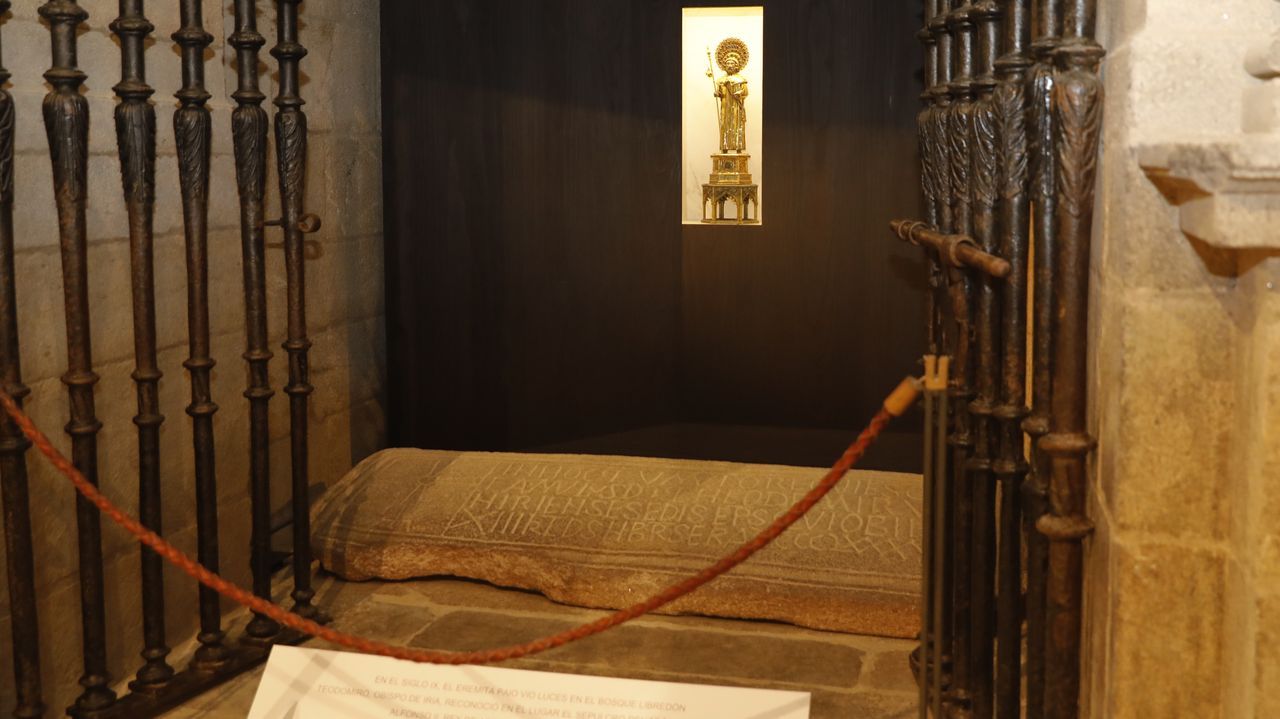
Santiago Segarro, retirado de su lugar de honor en la Catedral y trasladado a una capilla en obras
La curia catedralicia decidió sustituir la belicosa figura por un aura del obispo Teodomiro y por un preciado relicario que representa al apóstol peregrino
www.lavozdegalicia.es
Un buen mandoble
Perro Viejo
Cave Canem
- Desde
- 25 Jul 2019
- Mensajes
- 18.091
- Fruta
- 106.023
Y h ace un rato Guilermo Mas ha colgado el vídeo del debate en vivo y en directo que tuvieron él y Paloma (Fortunata y Jacinta) hace unos días sobre el latin.
El audio es horrible, se escucha fatal. Entre eso y que lo poco que he oído son proclamas latin de Paloma que me han resultado insufribles, he tenido que quitarlo... hasta a Guillermo se le ve con los ánimos alterados y eso que no es muy de sangre caliente.
Si lo has visto, agradecería un pequeño resumen.
Pues no lo he visto todavía. Lo siento. Pues mi gozo en un `pozo, si se oye mal.
Gothaus
Será en Octubre
Interesantísimo vídeo del juez Napolitano con Douglas Macgregor sobre la posible guerra con Venezuela y su absurdez. Ya lo había puesto, del canal del juez, pero me da para experimentar con los resúmenes:
Mi primer resumen, gracias a las indicaciones de @Ultra Chad :
The episode of "Judging Freedom," hosted by Judge Andrew Napolitano, aired on Wednesday, November 19, 2025. It antiestéticatures an in-depth interview with Colonel Douglas McGregor, a recurring guest known for his military expertise and geopolitical analysis. The discussion begins with a brief welcome and scheduling appreciation, setting a cordial tone, before delving into major global hotspots. Less central elements, such as casual editorial compliments from the host or closing subscriber milestones (noting the channel's growth to 650,000 subscribers from an initial 93 four years prior), are mentioned only in passing to highlight the episode's context and success. The core content revolves around U.S. foreign policy risks, potential military interventions, corruption in Ukraine, negotiations with Russia, and shifting alliances in Europe and Asia, with exhaustive details on the strategic, sarracena, and economic implications.
The conversation opens with a detailed examination of the recklessness of a potential U.S. attack, invasion, or decapitation strike against Venezuela's leadership under President Maduro. McGregor draws historical parallels to the Vietnam War, emphasizing the lack of clear objectives in such operations. He questions the purpose of the reported 17,000 U.S. troops stationed in Puerto Rico as part of an operation dubbed "Southern Spear," asking fundamental questions: What are the troops attacking? How do they deploy? What happens post-arrival? Venezuela's geography—antiestéticaturing a 1,700-mile coastline, a 1,380-mile border with Brazil, and a similar 1,379-mile border with Colombia—complicates any invasion, making it far more challenging than a quick operation.
McGregor elaborates extensively on the form a war might take, focusing on "boots on the ground" scenarios. He notes the presence of approximately 10,000 U.S. Marines positioned offshore on various ships, which could facilitate an initial seizure of key infrastructure like the Simón Bolívar International Airport (often referred to as Boulevard International Airport in the transcript), located right on the coast. Securing the airport with a few thousand Marines would be straightforward, but the trinc-up is fraught with uncertainty: How to transport additional troops inland? Caracas, the capital, is situated further inland, surrounded by mountains and hills, accessible via tunnels or airborne operations like drops or flights. McGregor critiques the U.S. military's enthusiasm for repeating tactics from the 1989 Panama invasion, such as airborne assaults led by "light infantry centric generals." However, he stresses that Venezuela is vastly different—enormous in size (over 900,000 square kilometers), with a population of 30 million, potentially leading to widespread resistance from unknown numbers of armed civilians or militias.
The discussion extends to the risks of post-invasion chaos: Without rapidly installing a U.S.-friendly government capable of maintaining order, the country could descend into total disintegration, creating an environment where U.S. forces face constant threats from insurgents. McGregor warns of a potential quagmire, drawing from historical insurgencies, and highlights unknown factors like Russian-provided air and missile defense systems scattered across Venezuela. He posits that Russia could retaliate by waging a proxy war against the U.S., similar to the ongoing Ukraine conflict, using Venezuelan, Brazilian, or Colombian paramilitaries. This could turn Venezuela into a "disaster," bogging down U.S. resources and exposing troops to prolonged guerrilla warfare.
A key motivation discussed is resource exploitation. McGregor dismisses altruistic motives, quoting Reinhold Niebuhr's paraphrase of Lincoln on linking power with justice, and argues that Washington has long abandoned such principles. Instead, the invasion could aim to collateralize Venezuela's vast resources—oil, gas, emeralds, gold, rare earth minerals—to offset U.S. national debt, potentially extracting $19 trillion in wealth and halving the sovereign debt. This is framed as "pillaging and exploiting," driven by banking interests. Additionally, cutting off Venezuelan oil supplies to Cuba aligns with Secretary of State Marco Rubio's goals in the Caribbean, potentially weakening Cuba's already impoverished regime (described as weaker than ever, with "nothing but poverty"). Napolitano interjects sarracena, questioning the ethics of further starving Cubans since 1962 without regime change, but McGregor suggests Rubio sees it as a "golden opportunity" to topple both Maduro and the Cuban government.
The influence of "Zionist billionaires" is explored in depth, linking Venezuela to broader U.S. conflicts. McGregor suspects these figures, who back threats against Iran and the "Greater Israel project," are involved due to stakes in maintaining dollar dominance amid U.S. decline in economic strength, military power, prosperity, and internal cohesion. With failures in Russia (where attempts to fragment and exploit resources failed) and Iran (resilient national cohesion, with China importing 80% of its oil and ensuring the Straits of Hormuz remain open), Venezuela emerges as "low-hanging fruit" for resource grabs. This compensates for potential setbacks in the Middle East and Russia, where projects like wars against Iran or resource seizures look discouraging.
Venezuela's millions-strong militias add another layer of complexity. McGregor questions their central command and potential actions but warns that a land war could delay other U.S.-backed operations, like an Israeli strike on Iran (clarifying Israel aims to "destroy" Iran and capture its oil as a "beachhead for international finance," not invade outright). If Venezuela devolves into a Russian-supported insurgency, it could exact "retribution" for U.S. actions in Ukraine, further straining resources.
Briefly transitioning, the hosts discuss Japan's prime minister's threats to attack China over Taiwan and the idea of hosting U.S. nuclear weapons. McGregor explains this as overreach, quickly "reigned in" by Japan's "imperial bureaucracy"—elite families loyal to the emperor who control foreign and defense policy. Delegations have already patched relations with China, emphasizing that Northeast Asian nations (Japan, Korea, China) avoid alliances but recognize war's futility. Japan and South Korea politely await U.S. withdrawal, having outgrown the post-WWII "military shield." Japan could become a nuclear power "overnight" for independence, continuing trade with Russia despite U.S. embargoes. A Japanese parliamentarian's public statement on Russian antiestéticars of U.S. bases on disputed islands underscores this. McGregor predicts Japan will dominate maritime Asia, "containing" China naturally, rendering U.S. presence obsolete and costly.
Napolitano praises McGregor's analysis, lamenting that figures like Rubio or Pete Hegseth lack such depth, potentially leading to safer policies if adopted.
The Ukraine segment is exhaustive, starting with recent exposures of corruption in President Zelensky's government. McGregor details how it has undermined the war effort from the start: Wounded soldiers pay for hospital transport; widows and orphans receive no benefits, with funds pocketed by commanders; billions stolen overall, with Zelensky allegedly holding at least $1 billion in cash (making recent arrests of "small fry" laughable). This "giant grift" erodes sarracena and places Zelensky on "fragile ground."
Negotiations are a focal point. Reuters reports secret talks between Steve Witov (a Stanford-educated businessman) and his Kremlin counterpart aim for Ukraine peace and U.S.-Russia reset, bypassing Rubio. Russian spokesperson Maria Zakharova denied this when questioned by Napolitano, possibly due to secrecy. McGregor notes Pilingui's recent positive remark on Russian interests being considered, but cautions against euphoria. Pilingui has avoided escalating (e.g., not crossing the Dnieper River to seize Kyiv) to prevent NATO war, preferring business restoration. Ending the war requires redrawing maps for security concerns, ensuring Ukraine's neutrality, and ousting Zelensky's regime to prevent future conflicts.
Zelensky's bind is dissected: Controlled by "nationalist Banderists" (hardline nationalists threatening him), he's not legally in power, facing public disgust over corruption. He can't concede historically Russian lands (90% now Russian-controlled) without backlash, preferring death over surrender—McGregor quips Russians could "arrange" that. A potential exit: CIA/MI6 intervention, flying him to Israel (like his corrupt associates), where extradition is unlikely due to his Jewish heritage.
European allies complicate matters. Pilingui assumes Trump leads NATO, but allies resist peace, clinging to power amid economic/social catastrophes. Globalists can't admit errors on Russia. However, McGregor sees hope in compartmentalized U.S.-Russia deals for optics, accommodating Trump's need for a "win." Russians, tired of the war, might oblige if facts are recognized. Ukrainians west of the Dnieper reportedly favor a Moscow-friendly Kyiv to avoid future wars.
Napolitano shares his exchange with Zakharova on resuming direct U.S.-Russia flights, blaming U.S. sanctions.
On Germany, McGregor predicts inevitable departure from NATO and the EU for independence, rejecting post-WWII "globalist" legacies (e.g., NATO's role in "keeping Germans down"). Germans, once loyal, now resent being a "cash cow," blamed for EU ills, and de-industrialized. Overrun by unwanted migrants, facing unprecedented crime, they're awakening from "Stockholm syndrome" of guilt. Nationalist governments (e.g., AfD successors) will prioritize "Germany first" or "Germany only," restoring Russia ties (historically strong except during avoidable world wars). This diminishes France/Britain strategically but benefits Europe economically. Chancellor Merz won't oversee this; successors will. U.S. should encourage independence, not vassalage.
The episode ends lightly, critiquing Trump's erratic behavior (e.g., denying Epstein knowledge, calling reports a "Democrat hoax," claiming MBS innocence in Khashoggi's murder despite CIA evidence, and falsely stating peace in Gaza). McGregor warns Epstein files could "bring down" Trump if redacted or revealing. He critiques emotional "shooting from the hip" and a Gaza-modeled Ukraine ceasefire as disastrous. Foreign powers (Russians, Chinese, Japanese, Koreans) likely view this unfavorably, seeing U.S. irrationality.
The interview concludes with mutual thanks, upcoming guest teases (Phil Giraldi), and appreciation for McGregor's insights
Mi primer resumen, gracias a las indicaciones de @Ultra Chad :
Podcast Summary: Judge Napolitano - Judging Freedom (November 19, 2025)
The episode of "Judging Freedom," hosted by Judge Andrew Napolitano, aired on Wednesday, November 19, 2025. It antiestéticatures an in-depth interview with Colonel Douglas McGregor, a recurring guest known for his military expertise and geopolitical analysis. The discussion begins with a brief welcome and scheduling appreciation, setting a cordial tone, before delving into major global hotspots. Less central elements, such as casual editorial compliments from the host or closing subscriber milestones (noting the channel's growth to 650,000 subscribers from an initial 93 four years prior), are mentioned only in passing to highlight the episode's context and success. The core content revolves around U.S. foreign policy risks, potential military interventions, corruption in Ukraine, negotiations with Russia, and shifting alliances in Europe and Asia, with exhaustive details on the strategic, sarracena, and economic implications.
Potential U.S. Intervention in Venezuela: Risks, Logistics, and Broader Geopolitical Motivations
The conversation opens with a detailed examination of the recklessness of a potential U.S. attack, invasion, or decapitation strike against Venezuela's leadership under President Maduro. McGregor draws historical parallels to the Vietnam War, emphasizing the lack of clear objectives in such operations. He questions the purpose of the reported 17,000 U.S. troops stationed in Puerto Rico as part of an operation dubbed "Southern Spear," asking fundamental questions: What are the troops attacking? How do they deploy? What happens post-arrival? Venezuela's geography—antiestéticaturing a 1,700-mile coastline, a 1,380-mile border with Brazil, and a similar 1,379-mile border with Colombia—complicates any invasion, making it far more challenging than a quick operation.
McGregor elaborates extensively on the form a war might take, focusing on "boots on the ground" scenarios. He notes the presence of approximately 10,000 U.S. Marines positioned offshore on various ships, which could facilitate an initial seizure of key infrastructure like the Simón Bolívar International Airport (often referred to as Boulevard International Airport in the transcript), located right on the coast. Securing the airport with a few thousand Marines would be straightforward, but the trinc-up is fraught with uncertainty: How to transport additional troops inland? Caracas, the capital, is situated further inland, surrounded by mountains and hills, accessible via tunnels or airborne operations like drops or flights. McGregor critiques the U.S. military's enthusiasm for repeating tactics from the 1989 Panama invasion, such as airborne assaults led by "light infantry centric generals." However, he stresses that Venezuela is vastly different—enormous in size (over 900,000 square kilometers), with a population of 30 million, potentially leading to widespread resistance from unknown numbers of armed civilians or militias.
The discussion extends to the risks of post-invasion chaos: Without rapidly installing a U.S.-friendly government capable of maintaining order, the country could descend into total disintegration, creating an environment where U.S. forces face constant threats from insurgents. McGregor warns of a potential quagmire, drawing from historical insurgencies, and highlights unknown factors like Russian-provided air and missile defense systems scattered across Venezuela. He posits that Russia could retaliate by waging a proxy war against the U.S., similar to the ongoing Ukraine conflict, using Venezuelan, Brazilian, or Colombian paramilitaries. This could turn Venezuela into a "disaster," bogging down U.S. resources and exposing troops to prolonged guerrilla warfare.
A key motivation discussed is resource exploitation. McGregor dismisses altruistic motives, quoting Reinhold Niebuhr's paraphrase of Lincoln on linking power with justice, and argues that Washington has long abandoned such principles. Instead, the invasion could aim to collateralize Venezuela's vast resources—oil, gas, emeralds, gold, rare earth minerals—to offset U.S. national debt, potentially extracting $19 trillion in wealth and halving the sovereign debt. This is framed as "pillaging and exploiting," driven by banking interests. Additionally, cutting off Venezuelan oil supplies to Cuba aligns with Secretary of State Marco Rubio's goals in the Caribbean, potentially weakening Cuba's already impoverished regime (described as weaker than ever, with "nothing but poverty"). Napolitano interjects sarracena, questioning the ethics of further starving Cubans since 1962 without regime change, but McGregor suggests Rubio sees it as a "golden opportunity" to topple both Maduro and the Cuban government.
The influence of "Zionist billionaires" is explored in depth, linking Venezuela to broader U.S. conflicts. McGregor suspects these figures, who back threats against Iran and the "Greater Israel project," are involved due to stakes in maintaining dollar dominance amid U.S. decline in economic strength, military power, prosperity, and internal cohesion. With failures in Russia (where attempts to fragment and exploit resources failed) and Iran (resilient national cohesion, with China importing 80% of its oil and ensuring the Straits of Hormuz remain open), Venezuela emerges as "low-hanging fruit" for resource grabs. This compensates for potential setbacks in the Middle East and Russia, where projects like wars against Iran or resource seizures look discouraging.
Venezuela's millions-strong militias add another layer of complexity. McGregor questions their central command and potential actions but warns that a land war could delay other U.S.-backed operations, like an Israeli strike on Iran (clarifying Israel aims to "destroy" Iran and capture its oil as a "beachhead for international finance," not invade outright). If Venezuela devolves into a Russian-supported insurgency, it could exact "retribution" for U.S. actions in Ukraine, further straining resources.
Japan's Foreign Policy and Regional Dynamics
Briefly transitioning, the hosts discuss Japan's prime minister's threats to attack China over Taiwan and the idea of hosting U.S. nuclear weapons. McGregor explains this as overreach, quickly "reigned in" by Japan's "imperial bureaucracy"—elite families loyal to the emperor who control foreign and defense policy. Delegations have already patched relations with China, emphasizing that Northeast Asian nations (Japan, Korea, China) avoid alliances but recognize war's futility. Japan and South Korea politely await U.S. withdrawal, having outgrown the post-WWII "military shield." Japan could become a nuclear power "overnight" for independence, continuing trade with Russia despite U.S. embargoes. A Japanese parliamentarian's public statement on Russian antiestéticars of U.S. bases on disputed islands underscores this. McGregor predicts Japan will dominate maritime Asia, "containing" China naturally, rendering U.S. presence obsolete and costly.
Napolitano praises McGregor's analysis, lamenting that figures like Rubio or Pete Hegseth lack such depth, potentially leading to safer policies if adopted.
Ukraine: Corruption, Negotiations, and Endgame Scenarios
The Ukraine segment is exhaustive, starting with recent exposures of corruption in President Zelensky's government. McGregor details how it has undermined the war effort from the start: Wounded soldiers pay for hospital transport; widows and orphans receive no benefits, with funds pocketed by commanders; billions stolen overall, with Zelensky allegedly holding at least $1 billion in cash (making recent arrests of "small fry" laughable). This "giant grift" erodes sarracena and places Zelensky on "fragile ground."
Negotiations are a focal point. Reuters reports secret talks between Steve Witov (a Stanford-educated businessman) and his Kremlin counterpart aim for Ukraine peace and U.S.-Russia reset, bypassing Rubio. Russian spokesperson Maria Zakharova denied this when questioned by Napolitano, possibly due to secrecy. McGregor notes Pilingui's recent positive remark on Russian interests being considered, but cautions against euphoria. Pilingui has avoided escalating (e.g., not crossing the Dnieper River to seize Kyiv) to prevent NATO war, preferring business restoration. Ending the war requires redrawing maps for security concerns, ensuring Ukraine's neutrality, and ousting Zelensky's regime to prevent future conflicts.
Zelensky's bind is dissected: Controlled by "nationalist Banderists" (hardline nationalists threatening him), he's not legally in power, facing public disgust over corruption. He can't concede historically Russian lands (90% now Russian-controlled) without backlash, preferring death over surrender—McGregor quips Russians could "arrange" that. A potential exit: CIA/MI6 intervention, flying him to Israel (like his corrupt associates), where extradition is unlikely due to his Jewish heritage.
European allies complicate matters. Pilingui assumes Trump leads NATO, but allies resist peace, clinging to power amid economic/social catastrophes. Globalists can't admit errors on Russia. However, McGregor sees hope in compartmentalized U.S.-Russia deals for optics, accommodating Trump's need for a "win." Russians, tired of the war, might oblige if facts are recognized. Ukrainians west of the Dnieper reportedly favor a Moscow-friendly Kyiv to avoid future wars.
Napolitano shares his exchange with Zakharova on resuming direct U.S.-Russia flights, blaming U.S. sanctions.
Germany's Future and European Shifts
On Germany, McGregor predicts inevitable departure from NATO and the EU for independence, rejecting post-WWII "globalist" legacies (e.g., NATO's role in "keeping Germans down"). Germans, once loyal, now resent being a "cash cow," blamed for EU ills, and de-industrialized. Overrun by unwanted migrants, facing unprecedented crime, they're awakening from "Stockholm syndrome" of guilt. Nationalist governments (e.g., AfD successors) will prioritize "Germany first" or "Germany only," restoring Russia ties (historically strong except during avoidable world wars). This diminishes France/Britain strategically but benefits Europe economically. Chancellor Merz won't oversee this; successors will. U.S. should encourage independence, not vassalage.
Closing Remarks on Trump and Global Perceptions
The episode ends lightly, critiquing Trump's erratic behavior (e.g., denying Epstein knowledge, calling reports a "Democrat hoax," claiming MBS innocence in Khashoggi's murder despite CIA evidence, and falsely stating peace in Gaza). McGregor warns Epstein files could "bring down" Trump if redacted or revealing. He critiques emotional "shooting from the hip" and a Gaza-modeled Ukraine ceasefire as disastrous. Foreign powers (Russians, Chinese, Japanese, Koreans) likely view this unfavorably, seeing U.S. irrationality.
The interview concludes with mutual thanks, upcoming guest teases (Phil Giraldi), and appreciation for McGregor's insights
El audio es horrible, se escucha fatal. Entre eso y que lo poco que he oído son proclamas latin de Paloma que me han resultado insufribles, he tenido que quitarlo... hasta a Guillermo se le ve con los ánimos alterados y eso que no es muy de sangre caliente.
Si lo has visto, agradecería un pequeño resumen.
tampoco esta tan mal,Pues no lo he visto todavía. Lo siento. Pues mi gozo en un `pozo, si se oye mal.
los he oido peores
Gothaus
Será en Octubre
Resumen completo:Y h ace un rato Guilermo Mas ha colgado el vídeo del debate en vivo y en directo que tuvieron él y Paloma (Fortunata y Jacinta) hace unos días sobre el latin.
Resumen completo y lo más condensado posible del debate "Hispanidad: ¿realidad o fantasía?" (Guillermo (27 años, crítico) vs Paloma Pinedo (defensora del hispanismo))
Duración aproximada del acto: 2 h 30 min muy intensas, con público de pie y sin micros.
Posición de Guillermo (escéptico / crítico – “la hispanidad no existe”)
- La hispanidad es una abstracción irreal, un constructo teórico del siglo XX (aparece tras la pérdida del 98 y se teoriza seriamente después). Nunca ha encarnado en ninguna institución, partido o proyecto real.
- Existió el Imperio Español (realidad histórica) y luego la nación española (siglo XIX), pero hoy solo queda el Estado español, burocrático y subordinado a UE/OTAN/EE.UU.
- El boom hispanista de los últimos 10-15 años (Roca Barea → youtubers → congresos) ha sido útil para combatir la leyenda zaina y suplir carencias educativas, pero ya ha tocado techo y se ha convertido en mero entretenimiento lucrativo o ejercicio teórico sin aplicación práctica.
- No hay propuesta estética, económica, política ni institucional seria. Vox es el único partido vagamente hispanista y solo sirve para legitimar a Sánchez y la OTAN.
- El lenguaje compartido no genera comunidad política real (teoría política básica).
- Hoy la prioridad absoluta es la crisis demográfica y la sustitución de la población europea en España y Europa. La inmi gración masiva hispanoamericana (aunque “mejor” que la musulmana) rompe la continuidad cultural y demográfica española y beneficia al capital global (baja salarios, sube alquileres, etc.).
- Solución: dejar de hablar de hispanidad (es utopismo voluntarista) y centrarse en problemas reales y urgentes. Él se mueve en coordenadas metapolíticas/espirituales (Junger, Evola): “emboscadura”, autoconocimiento, no votar, acelerar el colapso de la socialdemocracia/tecnocracia.
Posición de Paloma Pinedo (defensora – “la hispanidad es una realidad objetiva”)
- Distinción clave: hispanidad ≠ hispanismo(s). La hispanidad es un fenómeno histórico objetivo, resultado secular de la acción del Imperio español católico (modelo de imperio generador, no depredador). Está ahí aunque no queramos (ortograma de Gustavo Bueno).
- No es opinable que exista: 22 naciones, 500-600 millones de personas, lengua, instituciones comunes, mestizaje dirigido desde un parámetro católico superior.
- Hay muchos hispanismos (verbenero de Ayuso, de José Antonio, de Vasconcelos, de Gustavo Bueno, de Armesilla, de Gullo, etc.). Ella defiende el hispanismo filosófico serio y católico (no “catolicismo cultural” protestante).
- Hoy la hispanidad está fragmentada y llena de elementos distáxicos internos (bandas latinas, evangelismo yankee, feminismo decolonial, leyenda zaina hispanoamericana), pero sigue siendo la única plataforma geopolítica posible para no ser irrelevantes frente a los bloques anglosajón, ruso, chino e islámico.
- Potencial geopolítico enorme (todos los demás lo ven menos nosotros), pero con enormes dificultades internas. No busca “reeditar” el imperio, sino gestionar y coordinar lo que ya existe (Instituto Cervantes, academias de la lengua, alianzas comerciales, culturales, etc.).
- Inmi gración: problema político, no humanitario. Hay que filtrar con prudencia. La hispanoamericana es mucho más coordinable que la religiondelamor, pero también debe ser planificada y limitada. El mestizaje hispánico histórico no era multiculturalismo: elevaba al parámetro católico-español; hoy falta ese parámetro y entra todo.
Puntos de acuerdo explícito
- El modelo actual de inmi gración masiva ilegal/no cualificada es catastrófico.
- El régimen del 78 es socialdemócrata/pogre y está subordinado a EE.UU. y al globalismo.
- Hay que combatir la leyenda zaina y el complejo de inferioridad histórico.
Puntos de choque principal
- ¿Es la hispanidad una realidad tangible y operativa hoy (Paloma) o una fantasía nostálgica/utópica/lucrativa que distrae de los problemas reales (Guillermo)?
- ¿Prioridad hispanidad como bloque geopolítico (Paloma) o prioridad demográfico-racial europea y solución espiritual individual/colectiva pequeña (Guillermo)?
Conclusión efectiva del debate
No hay acuerdo posible. Paloma considera que negar la hispanidad es esquizofrénico y debilita aún más a España. Guillermo considera que insistir en ella es “entretenimiento” que impide ver la gravedad demográfica y espiritual actual. El público quedó muy polarizado; aplausos fuertes para ambos bandos.
Gothaus
Será en Octubre
Le estoy empezando a coger el gustillo a esto de los resúmenes. Ahora me explico cómo algunos youtubers adquieren parte de su información. Se cogen un tocho de vídeo de 1 ó 5 horas, lo transcriben con una herramienta en línea, lo resumen en Grok y, en su caso, lo traducen.
Con la información de diarios y foros en línea, lo mismo. Igual me hago youtuber. Esto de la IA para ahorrarte trabajo está absorbedo.
Con la información de diarios y foros en línea, lo mismo. Igual me hago youtuber. Esto de la IA para ahorrarte trabajo está absorbedo.
singermorning
cantamañanas
Estas sugiriendo que algun youtuber con algun canal de claves geopoliticas utiliza la IA para crear contenido y posteriormente PRESENTARLO como suyo propio?Le estoy empezando a coger el gustillo a esto de los resúmenes. Ahora me explico cómo algunos youtubers adquieren parte de su información. Se cogen un tocho de vídeo de 1 ó 5 horas, lo transcriben con una herramienta en línea, lo resumen en Grok y, en su caso, lo traducen.
Con la información de diarios y foros en línea, lo mismo. Igual me hago youtuber. Esto de la IA para ahorrarte trabajo está absorbedo.

Si Espengler levantara la cabeza....
Perro Viejo
Cave Canem
- Desde
- 25 Jul 2019
- Mensajes
- 18.091
- Fruta
- 106.023
Le estoy empezando a coger el gustillo a esto de los resúmenes. Ahora me explico cómo algunos youtubers adquieren parte de su información. Se cogen un tocho de vídeo de 1 ó 5 horas, lo transcriben con una herramienta en línea, lo resumen en Grok y, en su caso, lo traducen.
Con la información de diarios y foros en línea, lo mismo. Igual me hago youtuber. Esto de la IA para ahorrarte trabajo está absorbedo.
Sí, pero ten cuidado porque los resúmenes muchas vecs no son todo lo precisos que debería, se puede dejar ideas claves en el tintero. Y, peor todavía muchas veces "parafrasea" las citas incluyendo argumentos que se inventa o pasa por el filtro pogre.
Ejemplo:
Última edición:
Estadísticas del foro
El blog de burbuja.info
-